Guide to Planning Seating for an Event
- Mar 15, 2023

When planning an event, one of the many things you must consider is how to plan out the seating and tables. Making sure you have enough space for your guests to be comfortable can be challenging when you start to consider your venue size, guest list and the table size and shape.
Here are the recommended guidelines from the hospitality industry to help you determine how many tables you need, how to space your tables and chairs, and some suggestions on how to lay out the room.
Calculating the Number of Tables You Need
First you need a headcount for your event. If you’re still unsure, it’s better to err on the side of too many, rather than finding yourself without enough seats. Make sure you don’t exceed the maximum occupancy of the room.
Next, you need to choose your table type and size. There are many styles to choose from, but plywood tables with folding legs often work well because they are both versatile and portable. They come in several sizes, in rectangles, squares and rounds. The seating capacity for each is listed on our website. Tall tables are great for standing cocktail receptions.
Once you’ve decided on the table, you can calculate the number of tables you need. Simply divide the total number of guests by the seating capacity of each table. For example, if you have 100 guests coming and you have decided on tables that seat 6 people each, divide 100 by 6 to get an estimate of 17 tables (16.7 rounded up). It is always better to round up and have empty chairs than to risk seating shortage.
Spacing Between Chairs and Tables
While arranging your tables and chairs, one of the worst mistakes one can make is to not correctly consider how much space your guests and service staff require to move around freely. The last thing you want to do is make your company feel crowded and squished.
Here are the recommended spacing guidelines to follow as you’re arranging your seating and tables:
- Space between each table is 52 inches for rectangular or square tables and 60 inches for round tables.
- Space between table and chair: 18 inches
- Space for service aisles: 30 inches
- Space between two chairs without a service aisle: 16 inches of elbow room
- Leave 30 inches from the back of a chair to the wall
- Space for diagonal style square tables, corner to corner: 24 inches

Best Layouts for the Room
Beyond the minimum spacing requirements, you should decide on a standard layout for your tables so that everything looks uniform and you are using the space effectively
Here are some common layouts you can use with each shape of table:
For rectangular tables:
A rectangular shape lends itself to rows. If your room is longer than it is wide, set the tables up in horizontal rows to maximize that extra length. If it is wider, vertical rows work best.
For square tables:
A simple layout of rows works well, but you also have the option to angle your tables into a diamond shape. If you do this, the spacing can be adjusted to 24 inches between the corners of each table.
For round tables:
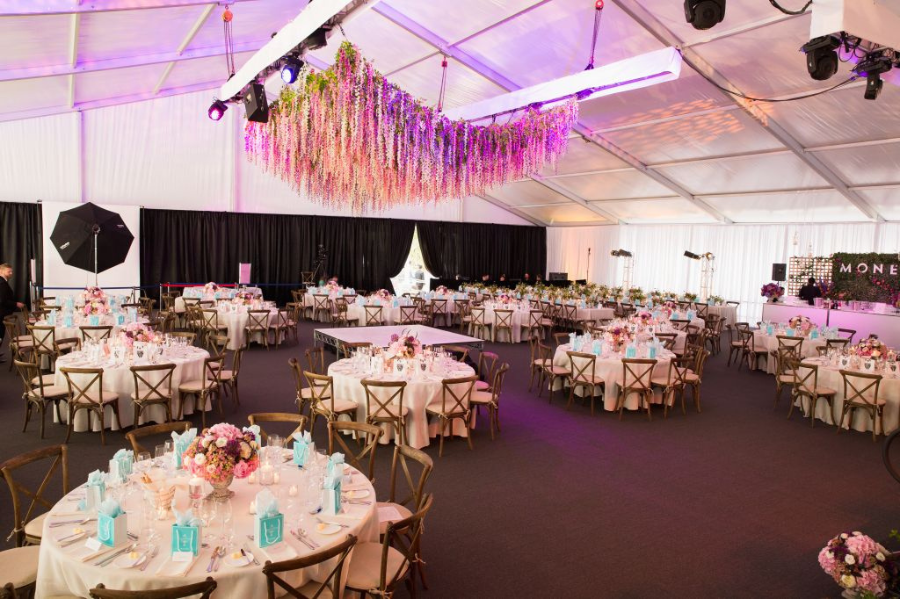
Round tables can be set up in rows as well, but keep in mind that they do require extra space (60 inches between tables). To help you maximize space when using round tables, shift the start of each row so that you have diagonal rows.

Types of Event Seating
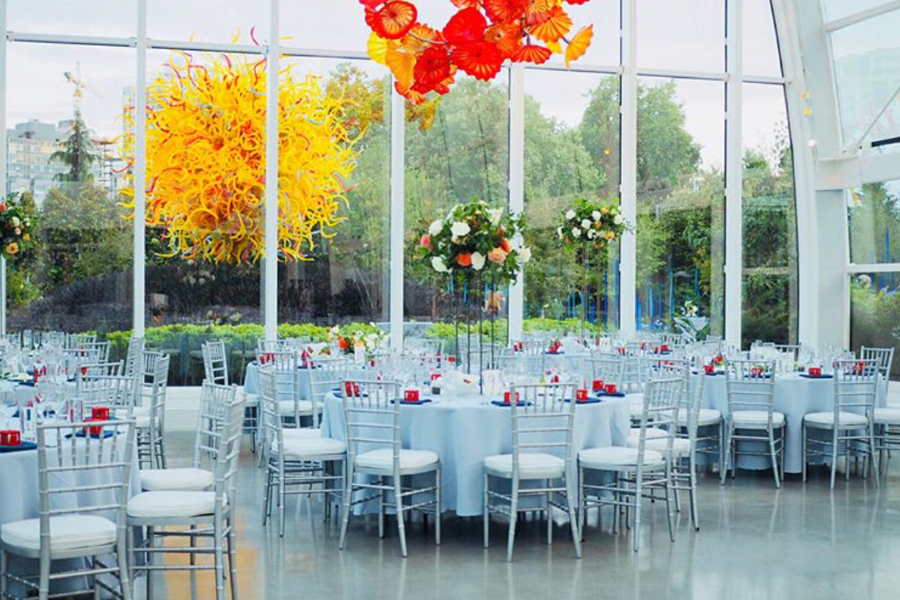
Depending on the type of event, you’ll need different styles of seating. Folding chairs are great for casual or outdoor events. If you need a high-end chair for a formal event, we have several beautiful options available. Check out all our seating options on our website.